

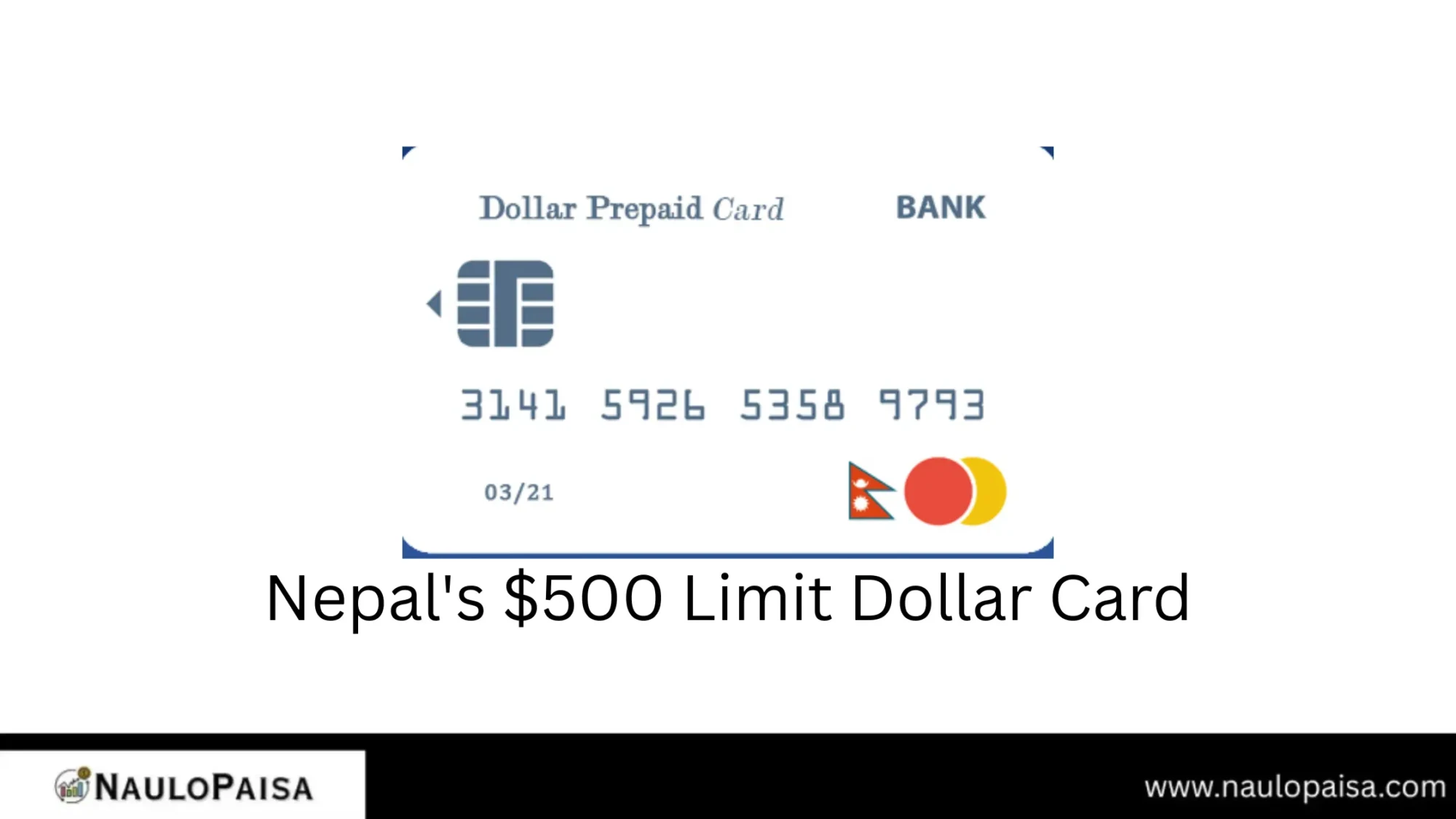
If you’ve ever tried paying for a Netflix plan, a Udemy course, or something small from Amazon using a regular Nepali debit card, you probably got declined right away. That’s the daily reality for most of us in Kathmandu and beyond. The Nepal Rastra Bank keeps tight rules on foreign currency to protect our limited dollar reserves, so normal cards just don’t cut it for international online payments.
Enter the dollar card — the prepaid USD card with that well-known $500 yearly limit. It’s not fancy, but it’s the simplest, most reliable way for regular people to handle small dollar spends without begging friends abroad or using workarounds. In 2026, the limit hasn’t budged, and banks are still issuing these cards left and right.
This guide covers everything: what the card really is, why the cap exists, how to get one (including which bank is actually the easiest right now), real pros and cons with details, practical uses, tips to stretch your $500, and answers to questions people ask all the time. Let’s get into it.
What Is Nepal’s Dollar Card (The $500 Version)?
It’s a prepaid Visa or Mastercard loaded with US dollars that you can use only for online international transactions. Banks call it things like “E-Com Dollar Card,” “Prepaid Dollar Card,” or “500 Dollar Card.”
You convert Nepali rupees to dollars at the bank’s rate, load the card, and spend on sites that charge in USD. The big rule: maximum $500 total per person per year, starting from the day your card activates (not January 1). Reload as often as you like, but once you hit $500 in spends, you’re done until the next anniversary.
This isn’t a travel card for hotels or ATMs abroad — those need extra documents like passport and tickets for higher limits (up to $2,500 or more). The basic $500 one is purely for e-commerce: online shopping, subscriptions, digital services.
Key points straight from NRB rules and bank sites in 2026:
- Only one card limit per person (you can’t get multiple $500 cards from different banks).
- For Nepali citizens with a bank account and basic ID (citizenship certificate, PAN if needed).
- Virtual versions give instant details; physical plastic takes a few days.
- Validity usually 3–5 years, but the spending cap resets yearly.
Why Is the Limit Stuck at $500?
Nepal imports far more than it exports, so dollars are scarce. The Nepal Rastra Bank (NRB) controls every bit of foreign exchange to make sure we have enough for fuel, medicine, machinery, and other essentials.
Without limits, online shopping could drain reserves fast — especially with everyone buying gadgets, courses, or crypto. The $500 cap (introduced around 2021) is the middle ground: enough for personal needs like streaming, software, or small buys, but not enough to hurt the economy.
For bigger needs, NRB allows higher amounts with proof:
- Travel cards: Show tickets, visa → up to $2,500.
- Business/education: Invoices or admission letters → even more.
- Freelancers with dollar income: Proof → sometimes up to $5,000 extra on some cards.
But for everyday folks without paperwork? $500 is it. No changes in 2026 — still the same.
Step-by-Step: How to Get Your Dollar Card
It’s easier than you think if you already bank with one of the issuers.
- Pick a bank that offers it (most Class A commercial banks do).
- Have an active savings/current account there.
- Go to a branch or apply via app/web (some like Global IME allow full online).
- Submit: Citizenship certificate, recent photo, filled form, sometimes PAN.
- Pay issuance fee (NPR 500–1,000 usually).
- Load funds: Transfer NPR equivalent (at bank’s exchange rate) up to your remaining limit.
- Activate and use — virtual cards start immediately.
Time: 1–7 days depending on bank and virtual vs physical.
Best Banks for Dollar Cards in 2026 (Real User Picks)
From forums, reviews, and bank pages, here’s the current top contenders. Global IME leads by a mile for ease.
| Bank | Card Name | Issuance Fee (NPR) | Reload/Top-up | Key Advantages | Drawbacks |
|---|---|---|---|---|---|
| Global IME Bank | Global E-Com Dollar Card | 500 (virtual), 600 (physical) | Free via app (Global Smart Plus) | Real-time loading, online apply, reliable, low hassle | App sometimes glitches |
| Prabhu Bank | Prabhu 500 Dollar Card | ~1,000 | Low or free | Straightforward, good for basics | Slightly higher fees |
| Everest Bank | Prepaid Dollar E-Commerce | $5 virtual, $10 physical (~650–1,300 NPR) | Reload facility | Cheap virtual, solid security | Limit notes “may vary” |
| Laxmi Sunrise | Dollar Prepaid Card | Varies | Via mobile money | 5-year validity, real-time block/unblock | Only one per entity |
| NMB / Others | Various USD Prepaid | 500–1,000 | Varies | Widely available | Slower approval sometimes |
Global IME gets the most love in 2026 because you can load from the app instantly without branch visits, and fees stay low. If you’re in Kathmandu, pop into a branch — staff usually sort it quick.
Everyday Uses That Actually Work
- Streaming: Netflix, Spotify, YouTube Premium, Disney+.
- Learning: Udemy, Coursera, Skillshare courses.
- Apps & software: Google Play credits, Adobe, Canva Pro, domain hosting.
- Shopping: Amazon (many items), AliExpress small orders, digital downloads.
- Freelance: Tools like Fiverr fees (if needed), stock photos, ads on Facebook/Google.
- Gaming: Steam wallet top-ups, in-app purchases.
Pro tip: Test small amounts first — some sites block prepaid cards, but most big ones accept Visa/Mastercard fine.
Pros Explained in Detail
- No more declined payments — Finally pay abroad without VPN tricks or foreign friends.
- Prepaid safety — Only loaded money at risk; no link to your main account if details leak.
- Budget enforcer — The $500 forces smart spending instead of impulse buys.
- Freelancer-friendly — Load your earnings (with proof for extra) and spend easily.
- Instant virtual access — Get card numbers in minutes for urgent subscriptions.
- No credit check or interest — Unlike credit cards, zero debt worry.
Cons Explained in Detail
- $500 runs out fast — A single good purchase (laptop accessory + course + subscription) can eat 30–50%.
- Exchange rate markup — Banks add 1–2% over NRB rate, so you lose a bit on conversion.
- Fees pile up — Issuance + possible reload/cross-border (1–3%) + top-up charges on some.
- One per person strict — Can’t get family extras; NRB tracks it.
- No ATM/POS abroad — Pure online; travel needs separate card.
- Anniversary reset frustration — If you activate in July, you wait till next July for fresh $500.
- Site rejections — Occasional prepaid blocks mean trial/error.
If your spends stay under $400–450/year, it’s golden. Over that? Look at verified higher-limit options.
How to Stretch Your $500 Further
- Load only what you need immediately — rates change daily.
- Time loads when NPR is stronger vs USD (check NRB forex page).
- Pay yearly for subscriptions to minimize transactions.
- Track via bank app — most show real-time balance.
- Choose low-fee banks (Global IME wins).
- Save receipts — useful if you later apply for higher verified limit.
Common Questions People Ask
Is the limit still exactly $500 in 2026?
Yes — no NRB change for basic e-commerce prepaid cards.
Can I get more than $500 without documents?
No, that’s the hard cap for the simple version.
Which bank is easiest right now?
Global IME — app loading, low fees, online apply.
Virtual or physical — which one?
Virtual for speed and online-only use; physical if you like having the card.
What if I hit the limit mid-year?
Transactions decline; wait for anniversary reset.
Unused dollars carry over?
Yes, balance stays, but new spends use the fresh annual allowance after reset.
Is it safe?
Very — prepaid + 3D Secure on most.